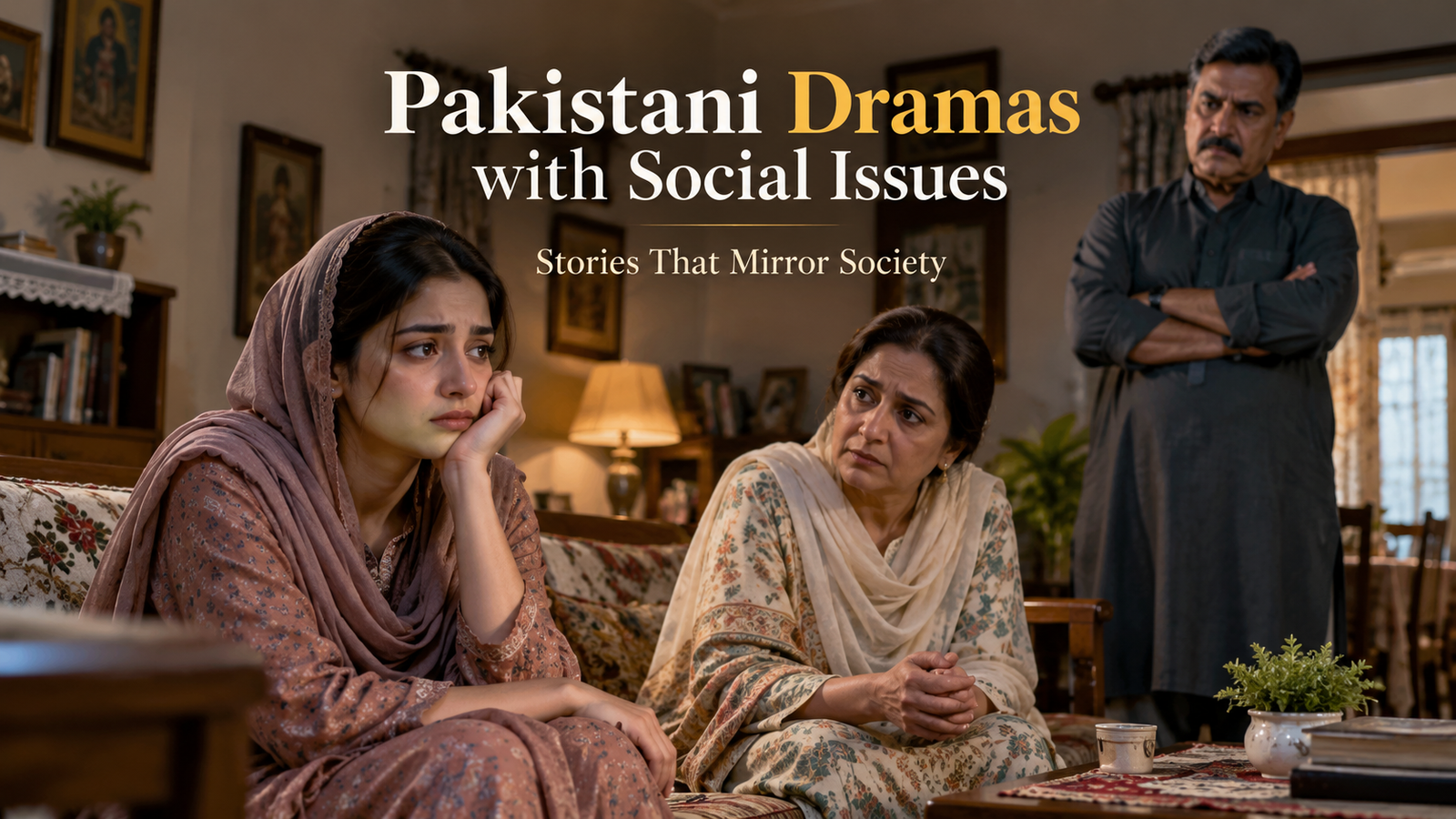
Pakistani dramas with social issues have always held a special place in television because they do more than entertain. They tell stories that feel close to real life, highlight problems that many families face, and often start important conversations in society. While romance and family relationships remain common themes, many Pakistani dramas go deeper by discussing education, poverty, domestic violence, class differences, women’s rights, mental pressure, child marriage, workplace discrimination, and social expectations.
This is one reason why Pakistani television dramas are watched not only for entertainment but also for their strong messages. A well written drama can make viewers think about problems that are usually ignored in daily conversations. It can show different sides of an issue and help people understand how social pressure affects individuals and families.
When I look at Pakistani dramas from this point of view, I feel that the strongest stories are usually those that connect personal emotions with wider social problems. Instead of giving long lectures, they show the issue through characters, relationships, and everyday situations.
Why Pakistani Dramas Focus on Social Issues
Pakistani society is diverse. People live in large cities, small towns, villages, and different cultural environments. Their problems are also different. Television writers often take inspiration from these realities.
Many Pakistani dramas with social issues focus on problems that viewers can recognize immediately. A family may be struggling because of financial pressure. A young woman may want to continue her education but face resistance. A child may be pushed into an early marriage. A working woman may face unfair treatment. A man may struggle with family expectations while hiding emotional stress.
These stories work because the situations feel familiar.
A social issue drama becomes more effective when it avoids making every character completely good or completely bad. Real life is more complicated than that. Sometimes people make wrong decisions because of fear, tradition, financial problems, or pressure from relatives. Strong Pakistani dramas often explore these complicated reasons.
Women’s Rights in Pakistani Dramas
Women’s rights are among the most common themes in Pakistani dramas with social issues.
Many stories show women facing restrictions related to education, marriage, work, inheritance, and personal decisions. Some dramas focus on women who are forced to sacrifice their dreams because society expects them to remain silent.
These stories can be powerful because they show how small decisions inside a family can affect someone’s entire future.
For example, a girl may be intelligent and interested in higher education, but her family may believe that marriage should come first. Another woman may be financially dependent on her husband and therefore unable to leave an unhealthy relationship.
Such stories encourage viewers to think about independence, respect, education, and equal opportunities.
The strongest dramas usually do not present empowerment as something unrealistic. Instead, they show gradual change. A character may first learn to speak for herself, then seek support, and eventually become capable of making her own decisions.
This kind of development makes the story more believable.
Domestic Violence and Emotional Abuse
Domestic violence is another serious subject that Pakistani television has explored.
Abuse is not always physical. Emotional abuse, controlling behavior, humiliation, financial restrictions, and constant threats can also damage a person deeply.
Some Pakistani dramas have shown how victims remain silent because they fear social judgment. They may worry about children, family reputation, or financial survival. In many cases, relatives also pressure them to stay in harmful relationships because divorce or separation is considered unacceptable.
This creates an important social discussion.
A drama can help viewers understand that a peaceful home should be based on respect, trust, and safety. Marriage should not become an excuse for controlling another person.
When handled responsibly, such stories can create awareness without becoming unnecessarily graphic or disturbing.
Education and Social Pressure
Education is another theme that appears frequently in Pakistani dramas with social issues.
In some families, education is considered essential for boys but optional for girls. In other situations, financial problems force children to leave school and begin working.
These stories highlight the long term value of education.
A child who receives proper education may have better opportunities in the future, while someone who leaves school early may remain trapped in financial difficulties.
Dramas can also show another side of education, which is excessive academic pressure.
Parents sometimes expect children to achieve perfect results without considering their interests, emotional health, or abilities. Constant comparison with siblings or classmates can create stress.
A balanced drama can remind viewers that education should develop confidence, knowledge, and skills rather than becoming a source of fear.
Poverty and Class Differences
Class differences are visible in many Pakistani drama stories.
Characters from wealthy and struggling families often live very different lives even when they belong to the same city.
A poor family may worry about rent, medical expenses, food, and school fees, while a wealthy family may have completely different concerns. When people from these backgrounds interact, class discrimination can become an important part of the story.
Pakistani dramas with social issues often show how people are judged by their clothes, houses, jobs, or family background.
This is an important message because financial status should not determine someone’s dignity.
A hardworking person from a low income family deserves the same respect as someone from a wealthy background.
Dramas that explore class differences can also show how social mobility works. Education, skills, hard work, and opportunities can improve lives, but structural challenges may still make progress difficult.
Forced Marriage and Child Marriage
Marriage is one of the most common subjects in Pakistani television, but some dramas use it to highlight serious social concerns.
Forced marriage occurs when a person is pressured into marrying someone without genuine consent.
Child marriage is even more serious because young people may not be emotionally, physically, or financially prepared for married life.
Pakistani dramas sometimes show how family traditions, financial agreements, or social pressure influence marriage decisions.
These stories can help viewers understand that marriage should be based on maturity, consent, respect, and responsibility.
A young person should not lose education or future opportunities simply because of pressure from relatives.
When dramas explore these issues carefully, they can encourage healthier conversations inside families.
Mental Health and Emotional Stress
Mental health has gradually become a more visible topic in Pakistani entertainment.
In the past, emotional problems were often ignored or misunderstood. People experiencing anxiety, depression, trauma, or extreme stress were sometimes simply told to be stronger.
Modern Pakistani dramas are increasingly showing that emotional struggles can affect anyone.
A person may appear successful from the outside but still feel lonely or overwhelmed. Family conflict, financial pressure, relationship problems, workplace stress, and social expectations can all affect emotional wellbeing.
Dramas can play an important role by showing supportive families, professional help, and healthy communication.
However, mental health stories need careful writing. They should avoid using psychological conditions merely as dramatic twists.
Respectful storytelling can reduce stigma and make viewers more comfortable discussing emotional wellbeing.
Workplace Problems and Gender Discrimination
Workplace issues are also appearing more frequently in Pakistani dramas with social issues.
Women entering professional environments may face discrimination, harassment, unequal opportunities, or criticism for working outside the home.
Men may also experience pressure to become the main financial provider even when economic conditions are difficult.
These stories reveal how social expectations can affect both genders differently.
A good workplace drama can show the importance of professional boundaries, fair treatment, merit, and respectful communication.
It can also highlight the value of financial independence.
When people have education, skills, and employment opportunities, they are often better able to make responsible decisions about their lives.
Family Reputation and Social Judgment
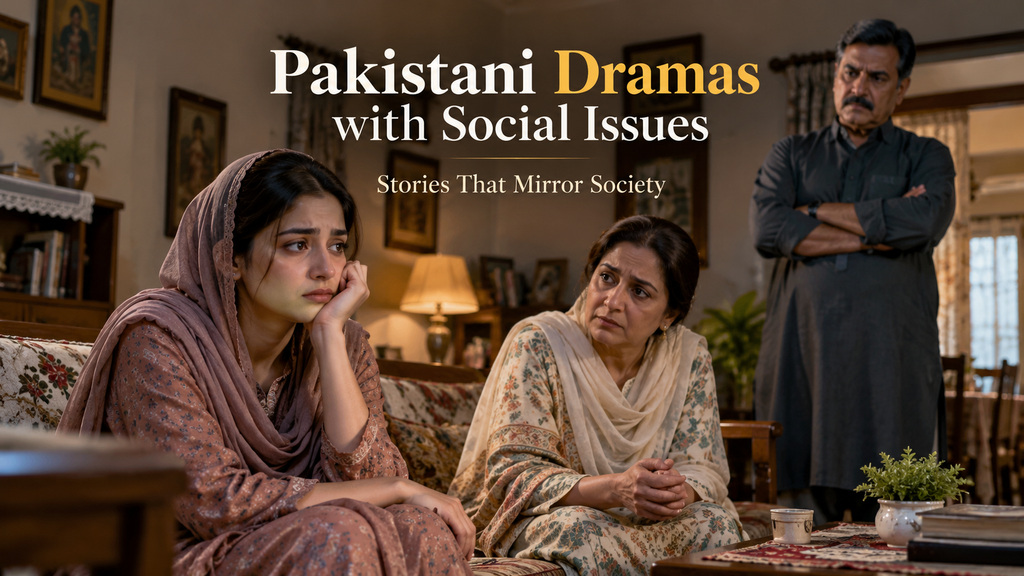
One of the strongest pressures shown in Pakistani dramas is the fear of what people will say.
Families may make important decisions based on social reputation rather than the happiness or safety of their own members.
A woman may be told to tolerate injustice because relatives might gossip. A man may choose a career he dislikes because the family wants social prestige. Young people may be forced to hide their opinions because disagreement is seen as disrespect.
Pakistani dramas often reveal how harmful this mindset can become.
Society is important, but personal dignity, safety, education, and happiness should not always be sacrificed for public opinion.
The best dramas do not reject family values. Instead, they show that family respect should include listening, understanding, and fairness.
The Role of Strong Characters
Characters are the heart of every social issue drama.
A powerful message becomes more effective when viewers connect emotionally with the people in the story.
A strong female character does not always need to be loud or rebellious. She may simply learn to make independent decisions.
Similarly, a good male character does not need to dominate others. He may support his family, respect boundaries, and challenge harmful traditions.
Older characters can also be shown positively. Parents and grandparents do not always have to represent outdated thinking. Some dramas show elders becoming sources of wisdom and support.
This balance makes storytelling more realistic.
Why Social Issue Dramas Attract Viewers
Pakistani dramas with social issues attract viewers because they create emotional connection.
People often see parts of their own lives in these stories.
Someone may recognize a strict parent, a supportive sibling, a difficult marriage, financial pressure, or a workplace problem.
This personal connection keeps viewers interested.
Another reason is discussion.
After a powerful episode, people often discuss the story with friends, family members, or online communities. These conversations can increase awareness about issues that might otherwise remain hidden.
Television therefore becomes more than entertainment. It becomes part of a larger social conversation.
The Importance of Responsible Storytelling
Social issues are sensitive, so writers and producers have an important responsibility.
A drama should not glorify abuse, violence, harassment, or discrimination simply to create ratings.
Negative behavior should be shown with context and consequences.
Writers should also avoid presenting victims as weak or responsible for the harm they experience.
Another important point is hope.
A serious drama does not always need a perfectly happy ending, but viewers should understand that better choices are possible.
Education, communication, legal awareness, family support, and personal courage can all become part of positive storytelling.
Pakistani Dramas Can Influence Society
Television has a powerful influence because millions of people watch dramas regularly.
A single popular story can introduce a social issue to households that may never have discussed it before.
A father may reconsider his daughter’s education after watching a meaningful story. A family may become more supportive of a working woman. Someone facing emotional abuse may recognize unhealthy behavior. Parents may understand the damage caused by constant comparison or forced decisions.
Of course, dramas alone cannot solve social problems.
Real change requires education, awareness, responsible institutions, supportive families, and better opportunities.
Still, entertainment can encourage people to think differently.
That is valuable.
Final Thoughts
Pakistani dramas with social issues are important because they combine storytelling with social awareness. They allow viewers to explore difficult subjects through characters, emotions, and family situations that feel familiar.
Issues such as women’s rights, domestic abuse, poverty, education, mental health, forced marriage, class differences, workplace discrimination, and social pressure deserve serious discussion.
When these subjects are presented through thoughtful writing, Pakistani dramas can entertain viewers while also encouraging reflection.
The most memorable drama is not always the one with the biggest cast or the most dramatic scenes. Sometimes it is the story that makes viewers recognize a problem they had previously ignored.
That is the real strength of Pakistani dramas with social issues.
They provide entertainment, but at their best, they also become a mirror of society. They show where problems exist, how people are affected, and why compassion, education, respect, and understanding are necessary for positive change.